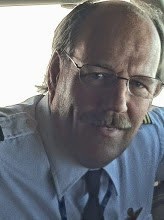
I sat down with Tim Caplinger, the founder of the Delta Pilots Association (DPA) near his home in Tampa last week. Caplinger began the interview by showing me a letter he had sent earlier in the day to Delta’s CEO Richard Anderson seeking DPA access to pilot lounges. Displaying the same candor, determination, and desire for transparency he put in his correspondence to Mr. Anderson, I found Caplinger to be an enthusiastic and upbeat individual; a necessity when trying to sell the idea of unseating a powerful and well-entrenched Air Line Pilots Association (ALPA). Where I had expected an angry and bitter anti-ALPA pilot, I found instead a positive, hopeful and visionary organizer.
My goal in speaking to Mr. Caplinger was to find out what motivated him to undertake this path, what he saw as the greatest reasons for creating an alternative to ALPA and what experience he brought to the formation of DPA. I was also interested in learning more about pilots who were supporting DPA. Was this the work of a special interest group or a broad coalition of Delta Pilots?
Caplinger was hired at Northwest Airlines (NWA) in 1999. In 2003, he experienced his first of two furloughs. Lasting 2 years, this furlough forced him to personally experience how ALPA worked for its members. He participated in a highly disappointing grievance process as he sought contractual furlough pay that had been denied to a large group of NWA pilots. It took 5 years and a second furlough before ALPA settled the grievance for 35 cents on the dollar. This settlement was nearly 3 times lower than a very similar settlement completed in half that time at another carrier. It was negotiated only one day prior to the scheduled grievance hearing between NWA management and the NWA Master Executive Council (MEC).
Furlough number two came a year after Caplinger’s return to NWA. This second furlough occurred despite a clause in the recently concluded NWA pilot contract clearly stating that no furlough would take place within 2 years of the contract signing. In utter frustration, he watched as ALPA sided with NWA management insisting that the ink that had barely dried on the new contract was a misprint; that he and his fellow furloughed pilots had no case. Caplinger eventually returned to work, understanding clearly NWA management’s primary role in his layoff, yet having seen from ALPA how political maneuvering and a simple typographical error cost hundreds of pilots their jobs unexpectedly.
Following the poorly handled settlement of the furlough pay grievance from five years prior, Caplinger filed 36 NASAP reports (NWA’s and the FAA’s joint safety reporting system) over an eight month period regarding various maintenance and ground safety lapses. This was his way of holding management accountable to their own standards while, at the same time, demanding his union’s full attention in representing him. This led to several meetings with both management and union leaders. Eventually, a satisfactory resolution was forged that suited everyone. Caplinger had replaced his disappointment and anger with a determination to improve both the company he worked for and the union that represented him. Through out this event, Caplinger still served the pilot group on the Negotiating Committee by completing the Scope Card each month. The furloughs and failed grievances had produced a positive outcome, both personally and in his approach toward his career.
During his first furlough, Caplinger’s responsibility to support a growing family forced him to immediately put his job loss aside and focus on survival. He embarked on an entrepreneurial venture with his brother; leading to the formation of what is now the largest fence company in Tampa. It was through the creation of a small business that Caplinger learned more about tenacity, innovation, leadership and believing in yourself. During his second furlough which began one year after returning to work from the first, Caplinger did not want to displace those who had taken over for him at the fence company. He found a sales position at a BMW dealership where he again excelled on a successful third career that ended only because of a return to his first love, aviation.
It was after his return to flying that Caplinger began seeing many reasons to explore the idea of an independent union. He watched as pilots worked in frustration to alter the bureaucratic behemoth ALPA had become. Local ALPA council resolutions were ignored and line-pilot initiated grievances were avoided. As a national union, he saw what he perceived to be serious conflicts of interest and a lack of financial accountability.
I asked Caplinger what he thought were the three biggest reasons for Delta Pilots to embrace an independent union. Without hesitation, he gave me his list:
• Conflicts of interest. ALPA represents Major, Regional, Low Cost and International carriers, all with significantly diverging interests.
• Finances. More than $35 million Delta pilot yearly dues dollars go to ALPA National with only approximately $9 million directly returning to the Delta Master Executive Council. Many of these dues dollars directly support competing ALPA carriers. Financial transparency is needed as well.
• Professional services. Caplinger thinks the Delta pilots would be best served by contracting critical services (such as negotiators and contract lawyers) to a highly skilled team of professionals and keeping the DPA union payroll lean.
Caplinger is a Detroit (DTW) based Boeing 767-ER copilot. In looking over the demographics of current DPA members, there is a wide and diverse group of pilots. DPA supporters are fairly evenly split between Captains and First Officers. There are a slightly higher percentage of pilots from Caplinger’s own DTW base, as is to be expected in the early stages of an organizing effort. Every Delta hub is represented and Atlanta, Delta’s largest hub, will soon supplant DTW with the largest number of supporters.
The selection of DPA union representatives is envisioned to become a seniority block system of representation. Equitably spreading the leadership among the entire Delta Pilot seniority list with one representative for each seniority grouping; this arrangement attempts to preclude any special interest group from dominating DPA leadership. The final say in the system of representation will be determined by the pilot membership.
In looking at the DPA website and speaking to Caplinger, potential supporters are attracted by his strategy of seeking collaboration among all interested Delta Pilots. Every pilot with an idea is welcome, including current ALPA volunteers. A system to work out differences and find mutually agreeable solutions is being developed. Caplinger does not claim to have all of the knowledge and experience needed to form a viable alternative to ALPA. He readily admits the need for a broad coalition of interested pilots working together to form an organization that meets an evolving pilot group and industry. The final product (the Constitution and By-laws – CBL) will be formulated during the authorization card drive and will be in place prior to a final decertification vote he hopes to see conducted by next May. Voting in May will provide a year and a half for DPA to prepare financially and organizationally for the next scheduled contract negotiation with Delta management.
Caplinger is eager to work for a strong and prosperous Delta Air Lines. He supports maintaining a positive, solutions-based approach to working with Delta management. He understands that well paid and respected pilots are more likely to be happy and productive pilots. He would like to help facilitate a return to the atmosphere of mutual respect between pilots and fellow employees. Caplinger thinks that a reinvigorated pilot workforce is a valuable asset to the success and prosperity of Delta Air Lines. He also sees a role for DPA in restoring a more enjoyable work environment for Delta pilots.
Finally, I asked Caplinger about pilots hoping DPA will act as a catalyst for dramatic change within ALPA. His response was emphatic, “ALPA can not be repaired. I do not want to encourage DPA support merely as a means to change ALPA. We need a new, independent union.” To his credit, Caplinger very intentionally stated he has no ill will toward ALPA and does not intend a point-by-point anti-ALPA campaign. He simply believes that an entirely new approach is needed to free Delta Pilots of conflicts of interest, install transparency for financial transactions, return greater value from a lower dues requirement and hire highly skilled professional help for Delta Pilots.
Union decertification is a difficult and challenging undertaking. Caplinger is well aware of the potential hazards of this often-emotional process. He has the full support of his family and closest friends. He recognizes the need to bring broad experience to DPA. That experience has come through the help of many Delta pilots, as well as the knowledge and support of retired pilots, pilots from other airlines and seasoned professionals. Caplinger sees himself as an entrepreneur and facilitator for the new union. He does not have all of the answers, but sees the Delta Pilots Association as a work in progress; “a new beginning in representation for all Delta Pilots.”
Friday, October 8, 2010


Thursday, September 23, 2010
The Summer of Our Discontent; fertile ground for an in-house Delta Pilots Union?
It has been a long, hot, frustrating summer here in ATL. Quite a bit of time was spent in unsuccessful pursuit of two grievances (combining International and Domestic Categories and the use of new scheduling practices). A lack of transparency and the restrictive control of information by the MEC Administration and its Committee Chairman greatly inhibit the opportunity to pursue seemingly valid grievances. In the process, good ideas and experience from pilot members (many whom are previous ALPA volunteers) is resisted and ignored. While the Delta MEC pursues a policy whose underlying theme is having a great working relationship with management, their relationship with those they represent continues to deteriorate. Incredibly, the MEC’s new mission statement mentions neither service nor representation of the Delta Line Pilot as objectives!
Captain Lee Moak, our Master Chairman, is now running for ALPA National President. His campaign letter to members of the ALPA Board of Directors states,
• "I will work to unify our members through open and direct communications, and I will work to increase our ranks through inclusion."
• "We must also work tirelessly to ensure that we listen to dissenting views with an open mind and understand that none of us have a monopoly on the good ideas."
While Captain Moak tells Delta Pilots in his recent communiqué,
• “There is no question that we continue to operate as a bottom-up organization …”
What do Delta Pilots experience from Capt. Moak’s Administration?
• The inability to obtain information from MEC Committees to support grievances,
• Numerous LEC Resolutions “Received” by the MEC without comment or action,
• A Pilot Working Agreement that has been altered by LOA numerous times before the wording/content is shown to Delta Pilots for comment, and
• Being governed by a strategy for recovery that has never been fully explained will not state specific goals, nor has the broad support of Delta Line Pilots who wish to be focused on restoration of losses.
Meanwhile, a drive to decertify ALPA and replace it with a stand-alone union, the Delta Pilots Association (DPA) is underway. They seem to be focused on the above issues plus conflicts of interest and inefficient use of pilot dues money at ALPA National. While still in early stages of organizing and writing by-laws, their competitive effort may serve as a wakeup call to ALPA’s leadership. Time will tell if this group can offer a worthy alternative. The upcoming year may prove very interesting if DPA can get enough Authorization Cards for a NMB election.
Next month the ALPA Board of Directors (of which our LEC Officers are members) meets to elect a National President. The Delta MEC elects a new Delta MEC Chairman in November. At the lovsl Council level many good candidates are also stepping forward to run for the one-third of LEC offices up for election this fall. The time to welcome a change towards transparency, openness, valuing of differing viewpoints and Union leadership focused on serving its members is long overdue. This will not happen unless you make your wishes known to your LEC Officers.
Captain Lee Moak, our Master Chairman, is now running for ALPA National President. His campaign letter to members of the ALPA Board of Directors states,
• "I will work to unify our members through open and direct communications, and I will work to increase our ranks through inclusion."
• "We must also work tirelessly to ensure that we listen to dissenting views with an open mind and understand that none of us have a monopoly on the good ideas."
While Captain Moak tells Delta Pilots in his recent communiqué,
• “There is no question that we continue to operate as a bottom-up organization …”
What do Delta Pilots experience from Capt. Moak’s Administration?
• The inability to obtain information from MEC Committees to support grievances,
• Numerous LEC Resolutions “Received” by the MEC without comment or action,
• A Pilot Working Agreement that has been altered by LOA numerous times before the wording/content is shown to Delta Pilots for comment, and
• Being governed by a strategy for recovery that has never been fully explained will not state specific goals, nor has the broad support of Delta Line Pilots who wish to be focused on restoration of losses.
Meanwhile, a drive to decertify ALPA and replace it with a stand-alone union, the Delta Pilots Association (DPA) is underway. They seem to be focused on the above issues plus conflicts of interest and inefficient use of pilot dues money at ALPA National. While still in early stages of organizing and writing by-laws, their competitive effort may serve as a wakeup call to ALPA’s leadership. Time will tell if this group can offer a worthy alternative. The upcoming year may prove very interesting if DPA can get enough Authorization Cards for a NMB election.
Next month the ALPA Board of Directors (of which our LEC Officers are members) meets to elect a National President. The Delta MEC elects a new Delta MEC Chairman in November. At the lovsl Council level many good candidates are also stepping forward to run for the one-third of LEC offices up for election this fall. The time to welcome a change towards transparency, openness, valuing of differing viewpoints and Union leadership focused on serving its members is long overdue. This will not happen unless you make your wishes known to your LEC Officers.
Thursday, July 8, 2010
MEC Update 10-01 SSDD
Line Pilot input is still an afterthought to the Delta MEC. Why do I say this? Consider MEC Update 10-01 issued yesterday. The Negotiating Process was described in that update. The course of action is to: Receive, Analyze, Direct, Negotiate, and Ratify. Nowhere in the process do they deliberately seek pilot input! Implicit in this bulletin is the MEC’s message; this is the process, we have no intent to change. This is why we still receive surprise LOA’s with no notice and with no innovative ideas sought from the line.
Notice how the Negotiator’s Analysis and Direction is conducted; with no changes to past practice. “The proposal is analyzed by the Negotiating Committee, professional staff and subject matter experts ... after which direction is given by the MEC.” Line pilot input is haphazard at best and frequently non-existent. Our contract is then changed without seeking the ideas, innovation and insight of those most familiar with how it feels to live with the contract the MEC is changing – The Line Pilot.
Through Council Resolutions Delta Pilots have formally called on the MEC to seek input prior to making decisions impacting our work life (Transparency and Communication Resolution). Councils representing almost half of the pilot membership passed this resolution. Yet it was rubber stamped “Received” and NO feedback has been given to the Delta Pilots by the MEC since these resolutions were passed back in March!
In addition, it has been two weeks since the conclusion of the June MEC meeting with no MEC Meeting Highlights published. We know next to nothing about what transpired in a four-day meeting two weeks ago and there is very little time for comment and input prior to next weeks Special MEC Meeting.
MEC Update 10-01 ends with the statement; “Your MEC will continue its policy of proactive engagement, interacting with … management, government agencies, industry officials, Wall Street and other{s}…who…effect…the careers and professional lives of the Delta pilots.” When will our union’s proactive engagement include the Delta Line Pilot?
Contact your LEC Representative and ask them to notify the membership of proposals that impact our lives and to formally include Line Pilot input into their deliberations.
Notice how the Negotiator’s Analysis and Direction is conducted; with no changes to past practice. “The proposal is analyzed by the Negotiating Committee, professional staff and subject matter experts ... after which direction is given by the MEC.” Line pilot input is haphazard at best and frequently non-existent. Our contract is then changed without seeking the ideas, innovation and insight of those most familiar with how it feels to live with the contract the MEC is changing – The Line Pilot.
Through Council Resolutions Delta Pilots have formally called on the MEC to seek input prior to making decisions impacting our work life (Transparency and Communication Resolution). Councils representing almost half of the pilot membership passed this resolution. Yet it was rubber stamped “Received” and NO feedback has been given to the Delta Pilots by the MEC since these resolutions were passed back in March!
In addition, it has been two weeks since the conclusion of the June MEC meeting with no MEC Meeting Highlights published. We know next to nothing about what transpired in a four-day meeting two weeks ago and there is very little time for comment and input prior to next weeks Special MEC Meeting.
MEC Update 10-01 ends with the statement; “Your MEC will continue its policy of proactive engagement, interacting with … management, government agencies, industry officials, Wall Street and other{s}…who…effect…the careers and professional lives of the Delta pilots.” When will our union’s proactive engagement include the Delta Line Pilot?
Contact your LEC Representative and ask them to notify the membership of proposals that impact our lives and to formally include Line Pilot input into their deliberations.
Friday, June 11, 2010
Good Scheduling Equals Quality of Life
Good Scheduling Equals Quality of Life
Without a doubt your work schedule is the most important factor affecting your quality of life on the Line. Imagine a scenario where major improvements are made to our scheduling rules using the vast experience and best ideas of the Line Pilots. Visualize the power of Line Pilots collaborating with the MEC who then takes these innovative ideas to management. That possibility exists today if you will take a moment to ask your Representatives to the MEC to ensure your input is heard.
DALPA and Management have agreed to create a Scheduling Optimization Team (SOT) to “meet, discuss, and craft recommendations on PWA changes.” The SOT will work to find common sense solutions to various scheduling issues, to include, but not limited to:
•Seniority on reserve trip assignments.
•Bidding for CQ training.
•Assignment to short call.
•Calculation of reserve requirements.
•Reserve unstacking parameters.
•Enhanced communications technology.*
The SOT is an ideal opportunity for the MEC to work more collaboratively with the Line Pilots. It would be a real travesty if a handful of pilots worked with management without broad input from the pilot group. At a minimum, several controlled access web pages should be created that have a comment section for every subject that the SOT would potentially discuss with management. Pilots could then post helpful ideas for the committee to consider. A more collaborative approach would be to create an interactive web presence that is moderated, allowing pilots to propose and then build on the ideas of one another (with unhelpful or politically motivated comments being removed by the moderator).
An effort of this nature will only occur if you ask for it. Send your ideas, comments and a request for a dedicated effort by the DALPA MEC to seek out our best ideas for scheduling. Please do it today; the SOT is scheduled to conclude in November.
Contact info for members of the DALPA MEC:
* From the Council 44 May 17 code-a-phone
Without a doubt your work schedule is the most important factor affecting your quality of life on the Line. Imagine a scenario where major improvements are made to our scheduling rules using the vast experience and best ideas of the Line Pilots. Visualize the power of Line Pilots collaborating with the MEC who then takes these innovative ideas to management. That possibility exists today if you will take a moment to ask your Representatives to the MEC to ensure your input is heard.
DALPA and Management have agreed to create a Scheduling Optimization Team (SOT) to “meet, discuss, and craft recommendations on PWA changes.” The SOT will work to find common sense solutions to various scheduling issues, to include, but not limited to:
•Seniority on reserve trip assignments.
•Bidding for CQ training.
•Assignment to short call.
•Calculation of reserve requirements.
•Reserve unstacking parameters.
•Enhanced communications technology.*
The SOT is an ideal opportunity for the MEC to work more collaboratively with the Line Pilots. It would be a real travesty if a handful of pilots worked with management without broad input from the pilot group. At a minimum, several controlled access web pages should be created that have a comment section for every subject that the SOT would potentially discuss with management. Pilots could then post helpful ideas for the committee to consider. A more collaborative approach would be to create an interactive web presence that is moderated, allowing pilots to propose and then build on the ideas of one another (with unhelpful or politically motivated comments being removed by the moderator).
An effort of this nature will only occur if you ask for it. Send your ideas, comments and a request for a dedicated effort by the DALPA MEC to seek out our best ideas for scheduling. Please do it today; the SOT is scheduled to conclude in November.
Contact info for members of the DALPA MEC:
* From the Council 44 May 17 code-a-phone
Thursday, April 22, 2010
How well does DALPA represent us? You decide.
Our DALPA leaders often say, “If you don’t like how we govern, either run for office or pass a resolution.” Nice sound bite. Since 99% of us have neither the time nor interest to run for office, we pass resolutions. We hope they are taken seriously, but what we see only fosters doubt and raises suspicion.
Last month, ALPA’s two largest councils passed two identical resolutions calling for better union communication, more transparency from our leadership and a public accounting of the losses we have suffered at the hands of management. How well did our Master Chairman communicate the way these resolutions were addressed by the MEC? You decide:
Resolution receiving AI 10-39: Fair Pay for Pilots. Resolution that the Delta MEC commit to more timely and robust communications with regards to TAs and LOAs.
Resolution receiving AI 10-45: Transparency and Communication 2.0.
Resolution receiving AI 10-46: Pilot Working Agreement Restoration.
These resolutions were “received” meaning the MEC “acknowledges and understands the meaning and intent” of the resolutions. This is a totally inadequate response and shows a lack of respect for our time and effort in passing these resolutions. Pilots from many councils worked together to travel to LEC Meetings, craft resolutions, debate their merits and pass them unanimously. The Delta pilots as a whole have a significant interest in their outcome as well. Yet we know next to nothing about how our leaders honor the expressed will of their members.
This no-response communication cannot continue. This is our union and it is not serving our needs. Please, step up and serve us better, or step aside!
Wednesday, March 24, 2010
Pilot to Pilot
Dear DALPA Leader,
Keep us informed, Don’t negotiate without input. Be inclusive. Listen well. Be more transparent; it fosters trust.
Most any Delta Pilot would agree with these things. Discontent and strife is growing in our union. I feel discouraged myself and hear daily from a broad cross section of pilots who expect more from their union.
As someone who believes in collaborative efforts and values the possibilities of helpful models of conflict resolution, this growing discontent could be either helpful or harmful. As leaders of our union, your actions will help guide the outcome.
I had planned attending the MCO MEC Meeting to take the 10 minutes of the MEC’s time that is made available to the membership via the MEC Policy Manual. Let me take 2 minutes here instead and offer a few thoughts:
I increasingly speak with pilots who would like to de-certify ALPA. I am not one of those pilots. But I do understand why they think this way and see how our present difficulties make efforts like that more probable. Help prevent that. Please, keep us informed, Don’t negotiate without input. Be inclusive. Listen well. And one last thing: please be more transparent; it fosters trust.
Keep us informed, Don’t negotiate without input. Be inclusive. Listen well. Be more transparent; it fosters trust.
Most any Delta Pilot would agree with these things. Discontent and strife is growing in our union. I feel discouraged myself and hear daily from a broad cross section of pilots who expect more from their union.
As someone who believes in collaborative efforts and values the possibilities of helpful models of conflict resolution, this growing discontent could be either helpful or harmful. As leaders of our union, your actions will help guide the outcome.
I had planned attending the MCO MEC Meeting to take the 10 minutes of the MEC’s time that is made available to the membership via the MEC Policy Manual. Let me take 2 minutes here instead and offer a few thoughts:
- Please quit surprising us! If you negotiate with management or make decisions that impact line pilots, let us know and seek our input first. Communication technology makes this very easy. If this is not done, expect consequences.
- The Delta Pilots are a vast resource of ideas and knowledge. Please, tap into that rich resource by collaborating with us. Communication technology can facilitate this.
- The two largest councils representing 50% of Delta Pilots passed two identical resolutions about communication and pay. Both councils just elected reps that promised to vastly improve communication. It might be a good idea to pay attention to that.
- Listening is difficult. Here is a suggestion. When pilots speak to you, we may frequently express inaccuracies. Initially ignore these mistakes and listen to what is really being asked for. Let us know you hear us before you tell us why we are wrong. Pilots are tired of the ALPA guy who misses the bigger message.
- Please, set an example. You must come together as a body before you can expect to unify line pilots.
- Don’t be afraid of conflict. There is a respectful way to remind management how they coerced unreasonable concessions from us through bankruptcy law. You can be respectful and direct by letting them know we will seek restorations at every opportunity. Respect and forceful are not mutually exclusive.
- There are ways for our union to have internal conflicts that strengthen us. Please seek them out.
I increasingly speak with pilots who would like to de-certify ALPA. I am not one of those pilots. But I do understand why they think this way and see how our present difficulties make efforts like that more probable. Help prevent that. Please, keep us informed, Don’t negotiate without input. Be inclusive. Listen well. And one last thing: please be more transparent; it fosters trust.
Subscribe to:
Posts (Atom)

 Posts
Posts

